
Author: Dr. Rajesh Tandon | 14-Jul-2026
.png)
Participating in the Silver Jubilee conversations of APMAS in Hyderabad earlier this month, it was a great delight to meet a generation of former senior government officials. The story of the formation of APMAS is about a respectful partnership between civil society and senior government officials of that era. Al Fernandes (MYRADA) and Vijay Mahajan (BASIX) began to explore the need for a support organisation for financial inclusion, especially in the undivided Andhra Pradesh. Joining in this exploration around the late 1990s were senior IAS officers – S.P. Tucker, K.T. Raju, and Shaji Krishnan V. (Chairman of NABARD).
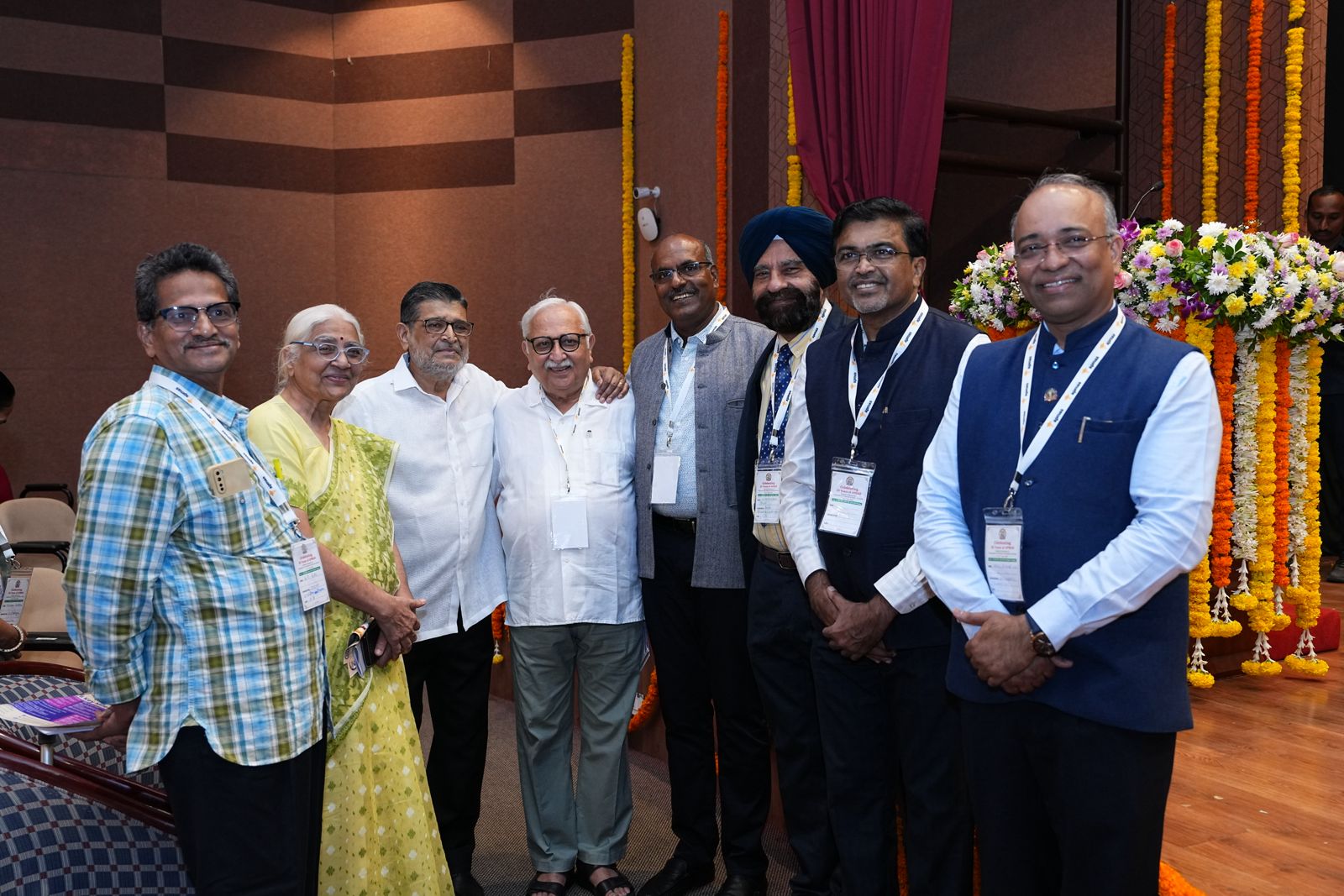
Narrating the experiences of such partnership during the Silver Jubilee of APMAS, these officers and their civil society counterparts highlighted the mutual respect for distinctive competencies that each party to the partnership brought. Recalling these stories, the memories of such respectful collaboration during the 1980s onwards came to my mind.
.jpeg)
When the review of Education Policy was held in the mid-1980s, then Secretary of Education late Shri Anil Bordia invited several practitioners from the voluntary sector to participate actively; I was asked to chair the working group on capacity building of functionaries of adult education programs. Preparations for India’s participation in UN Summit on Social Development were discussed under the leadership of then Secretary in Prime Minister’s Office (PMO), and several voluntary agencies ‘experts’ were invited to contribute on the key focus of India’s presentation on poverty and participatory development.
Similar mutually respectful partnerships continued both at national and state levels in the current century. The initiative to formulate a National Policy on Voluntary Sector [read here] began during the Prime Ministership of Late Shri Atal Bihari Vajpayee when late Shri K.C. Pant was the Vice Chairman of the Planning Commission. Such partnerships developed huge impacts on strengthening Panchayati Raj Institutions when a new national Ministry was formed under the leadership of Shri Mani Shankar Aiyer in 2004. Drawing lessons from various local pilots on micro planning and inter-departmental convergence undertaken by grassroots civil society, the then Planning Commission, under the leadership of late Shri B. N. Yugandhar, developed a manual for participatory bottom-up planning for both panchayats and nagarpalikas in 2008. That is the basis for the current Gram Panchayat Development Plan (GPDP). PRIA’s nation-wide campaign - Pre-Election Voters’ Awareness (PEVAC) could not have succeeded without the active support of Chairpersons of State Election Commissions since 2000; it was a pleasure to meet Shri Kaki Madhav Rao, who chaired PEVAC partnerships then, now Chairperson of APMAS.
My experience of such partnerships with government officials over the past five decades has convinced me that the essence of such effective collaborations is mutual respect. When government officials respect the distinctive expertise of civil society and partnership decisions are based on open conversations, collaborations continue. When governmental authority, jurisdiction and power are used to make decisions, partnerships flounder and trust declines.
.jpeg)
Reflections at APMAS Silver Jubilee also raised questions about how to restore mutual trust of that era, as challenges facing the country are enormous and there is a greater need for such effective partnerships.
A tribute to Comrade Damodar Thankappan, reflecting on over four decades of friendship, solidarity, and shared work with PRIA. From textile workers’ struggles and occupational health to construction workers’ rights and workers’ cooperatives, the blog celebrates his lifelong commitment to workers’ dignity, leadership, and collective action.
In this blog, Dr. Bandyopadhyay reflects on rethinking monitoring and evaluation in development practice. Drawing on his experience with participatory networks, he explores how organisations can move beyond compliance-driven reporting towards listening, collective learning, adaptation, accountability, and cultures that enable honest reflection.
This blog, by Dr. Anshuman Karol, explores why the future of higher education depends on community-engaged research, global collaboration, and knowledge democracy. It highlights how Community-Based Participatory Research enables universities and communities to co-create solutions for today's interconnected social and environmental challenges.
.png)
.png)